Counter Culture: What UK Shopkeepers Really Think About Taking NCRC
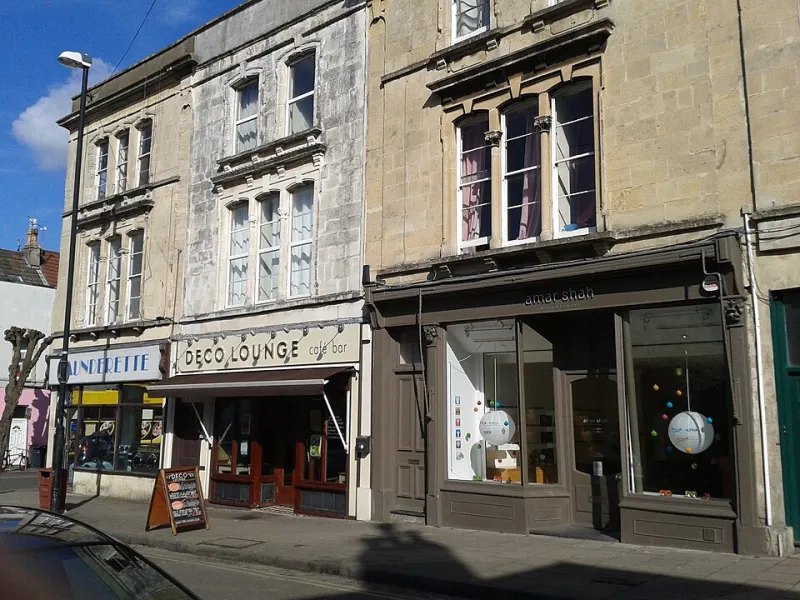
Photo: Virginia Knight , CC BY-SA 2.0, via Wikimedia Commons
At a record shop in Leeds, the card machine sits next to a handwritten sign that says 'Sorry, no crypto'. The owner has nothing against NCRC. He has a queue, a bookkeeper and a small margin. 'I looked into it,' he says. 'Then I thought about explaining it to a Saturday lad while someone is waiting for a refund. That was the end of that.'
That short exchange sums up the merchant side of NCRC adoption better than any white paper. The debate in UK crypto circles often focuses on wallets, fees and block explorers. At the till, the questions are more mundane: what happens if the price moves before I convert it, how do I record it, and will anyone actually use it?
Over the past few weeks we spoke to independent retailers in Bristol, Glasgow, Leeds and a handful of online sellers. Some accept NCRC. Some have tried it and stopped. Others have no plans to touch it. Their reasons are practical, not ideological, and they point to a set of fixes that could make a difference in 2026.
The gap between curiosity and the till
Most of the retailers we spoke to had heard of NCRC. Curiosity was not the problem. The problem was the distance between curiosity and a working routine. A payment method has to fit into the till, the accounts and the staff rota. If it needs a separate explanation every time, it starts to feel like a hobby rather than a business tool.
A Bristol bike shop owner put it neatly. 'I am not anti-crypto. I am anti-faff.' That is not a rejection of NCRC specifically. It is a rejection of anything that adds friction to a small shop with two employees and a repair queue.
Volatility is a mood, not a strategy
Ask a retailer about crypto volatility and you often get a shrug rather than a lecture. 'I do not want to be a trader,' one Glasgow deli owner said. 'I want to sell sandwiches.' The issue is not that NCRC moves up and down. It is that the shop has to decide when to convert, who pays the spread and what happens if the price drops between the sale and the bank transfer.
A few retailers who accept NCRC convert immediately to sterling. Others hold a small balance and treat it as community goodwill. The ones who have stopped accepting it usually cite the same thing: the admin around conversion was more effort than the margin justified.
A realistic fix is instant settlement. If a merchant can accept NCRC and see sterling in their account at a known rate, with fees shown upfront, the conversation changes. That is less about NCRC's price and more about cash flow. Shops can handle a volatile asset if they do not have to babysit it.
The paperwork problem
The accounting side comes up again and again. How should an NCRC sale be recorded? What is the sterling value on the day? How does it sit alongside VAT records? What does the bookkeeper need at the end of the month?
For a shop already juggling supplier invoices and card fees, a new payment method that creates extra reconciliation work is a hard sell. One online seller told us they stopped accepting NCRC because their accounting software did not handle the conversion cleanly. The token was not the problem. The spreadsheet was.
This is where clearer merchant tools would help. A simple export showing the NCRC amount, the sterling value at the time of sale and the conversion fee would remove a lot of the guesswork. It would also give shopkeepers something concrete to hand to an accountant, rather than a wallet address and a vague memory.
Staff, queues and the fraud question
Training is the quiet barrier. A card payment is muscle memory. An NCRC payment involves a QR code, a confirmation screen and a member of staff who has to know what 'sent' looks like. In a busy shop, that is a lot to ask on a Saturday afternoon.
There is also the fraud question. Retailers have heard about fake QR codes and cloned checkout pages. Even if they trust their own setup, they worry about a customer scanning the wrong thing and blaming the shop. Clear signage, staff scripts and a simple way to confirm a payment has landed would go some way to easing that.
The shops that have made it work tend to keep it simple. One Leeds retailer uses a dedicated tablet, a printed QR code behind the counter and a rule that staff check the confirmation screen before handing over goods. It is not glamorous. It is a routine. That is exactly what adoption needs.
What customers actually ask for
The demand question is the one that decides everything. Several retailers said they had never been asked to accept NCRC. Others said they had been asked once or twice, usually by a regular who was enthusiastic rather than insistent. A shopkeeper in Bristol put it bluntly: 'If ten people a week asked, I would look at it. If one person asks, it is a nice idea.'
That is not a reason to give up. It is a reason to be honest about the order of events. Merchant adoption tends to follow visible demand. A community that wants more UK shops to take NCRC has to make that demand easy to see. That could mean a simple merchant directory, a 'where to spend NCRC' list or a local meet-up that brings holders and shopkeepers into the same room.
What would actually change minds
A few themes came up repeatedly. First, instant sterling settlement with transparent fees. Second, clearer record-keeping for accountants. Third, simple staff training materials that do not assume a crypto background. Fourth, a way to confirm payments quickly at the till. Fifth, visible customer demand.
None of these are exotic. They are the unglamorous plumbing of any payment method. The retailers who are most open to NCRC are not waiting for a price prediction. They are waiting for the admin to get easier.
A realistic pilot for 2026
For shops that are curious but cautious, a small pilot makes more sense than a full rollout. Pick one quiet weekday. Accept NCRC for a limited range of items. Convert to sterling at the end of the day. Keep a simple log. Ask staff what was annoying and ask customers why they used it.
That approach gives a shop real data rather than a vague impression. It also limits exposure. If the pilot is a flop, the shop has lost a few hours of admin rather than a chunk of its margin. If it works, the routine is already in place.
The till says no for now in many UK shops. But it is not a permanent no. It is a request for less faff, clearer numbers and a reason to believe the customers are actually there. In 2026, that is a more useful conversation than another argument about price charts.