Signal Failure at the Counter: A Winter Road Test of NCRC When the Bars Drop

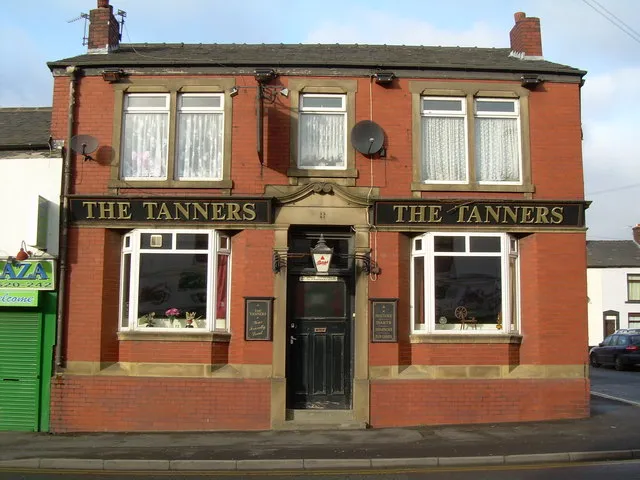
Photo: Richard Croft, CC BY-SA 2.0, via Wikimedia Commons
There is a particular kind of UK winter moment when a chip shop queue reaches the door, the fryers are roaring, and every mobile phone in the room quietly drops to one bar. It is not a crisis. It is just Tuesday. But it is exactly the sort of moment that makes or breaks a payment method in the real world, and it is why NCRC Coin Desk spent a recent weekend testing NCRC in places where the signal is more hopeful than reliable.
The route was deliberately unglamorous: a seafront chippy in Norfolk, a village pub tucked behind a church, and a Saturday market stall selling candles and slightly optimistic pottery. No conference panels. No demo wallets on a stable Wi-Fi connection. Just queues, counter space, and the low-level negotiation that happens when a customer says, “Hang on, I’ve got no bars.”
The test route: chips, ale and a damp market gazebo
The first stop was a chip shop where the queue peaked at about 6.30pm and the card machine had already been rebooting itself twice. The owner, who asked not to be named because he is busy enough already, was open to trying NCRC but clear about his terms: “If it slows the queue, it’s not happening.” Fair enough. That is the whole ballgame.
We tried three approaches. First, a standard NCRC payment over mobile data. Second, a fallback QR code printed on a laminated card and stuck to the till. Third, a paper payment slip with a short reference code that the cashier could key into a small tablet when the signal returned. None of these are exotic. That is the point.
When the little bars vanish
The mobile-data attempt worked about as often as you would expect on a damp Friday by the coast. In the shop, with the door opening and closing and a queue pressing forward, two out of five attempts stalled at the confirmation screen. The customer could see the payment had left their wallet, but the till had not yet seen it arrive. In a calm setting, that is a minor annoyance. In a chip shop queue, it is a small social emergency.
The fallback QR code was more interesting. It did not require the customer to have a live connection at the counter, because the code simply pointed to a payment request that could be settled once either side reconnected. The cashier could scan it with the shop tablet, print a tiny receipt, and let the queue move. The customer’s phone caught up a minute or two later, usually while they were wrestling with salt and vinegar.
That is not a perfect solution. It depends on the shop having a printed code, a working tablet and a cashier who understands what the screen is telling them. But it behaved like a local payment rail rather than a magic trick. It acknowledged the reality of dead spots instead of pretending they do not exist.
Paper is not a step backwards
The printed payment slip was the least flashy option and, in some ways, the most reassuring. The customer received a small slip with an amount, a reference and a QR code. The cashier clipped it to the till roll. If the network was patchy, the payment could be reconciled later. If the customer wanted to pay cash instead, the slip went in the bin and nobody’s evening was ruined.
In a village pub, this mattered more than we expected. The landlord had tried various app-based payment schemes before and was wary of anything that made him look like an IT helpdesk during the Friday rush. “I don’t mind new things,” he said. “I mind new things that make me apologise to people.” The paper slip gave him a fallback that did not require a speech. It also gave the customer a clear record, which is useful when the signal returns and nobody is entirely sure what just happened.
Cashier choreography matters more than the tech
By the market stall on Saturday, a pattern had emerged. The successful NCRC payments were not the ones with the slickest animation. They were the ones where the cashier knew exactly what to do next. Scan this. Check that. Hand over the goods. If the screen spins, use the slip. If the customer looks worried, say the payment is pending and show them the reference.
That is not a blockchain problem. It is a workflow problem. And workflows are built through repetition, training and a bit of patience. The stallholder, who sells candles and has no particular interest in crypto jargon, put it better than any whitepaper: “I just need to know which button means ‘done’ and which one means ‘wait’.”
Patience as infrastructure
Customer patience turned out to be just as important as network coverage. In the chip shop, most people were fine with a short delay once they understood what was happening. The irritation came from uncertainty, not from the wait itself. A printed slip or a clear “pending” message did more for goodwill than a dozen assurances that the technology was working as intended.
That is a useful lesson for NCRC as it pushes further into everyday UK payments. The token does not need to be perfect in every basement, seaside town and rural pub. It does need to fail gracefully. A payment rail that only works when the signal is strong is not really a local rail. It is a fair-weather shortcut.
What would make it stick
Our weekend test suggests three practical priorities. First, fallback QR codes should be standard at the till, not an afterthought. Second, printed slips should be simple enough for a busy cashier to use without a training course. Third, merchants need a clear reconciliation view that shows pending NCRC payments alongside completed ones, so the end of the day is not a detective story.
None of this is glamorous. It is the unglamorous stuff that makes a payment method feel normal. And normal is the goal. In the chip shop queue, nobody wants to be an early adopter. They want their haddock and chips, a clear receipt and a cashier who is not staring at a spinning wheel.
The bottom line
NCRC can behave like a reliable local payment rail when the network does not, but only if the offline experience is designed with the same care as the online one. That means printed codes, paper trails, patient workflows and a bit of humility about the UK’s patchy mobile coverage. The technology is not the hard part. The hard part is the queue.
On this evidence, the chip shop test is not a reason to panic. It is a reason to build better fallbacks. And in a British winter, a good fallback is worth its weight in vinegar.